"Who wanted to hear from dismal economists warning that the whole thing was, in effect, a giant Ponzi scheme?"Paul Krugman November 27, 2008
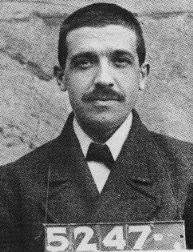 That reference to a Ponzi Scheme in Krugman’s op-ed was the first time I’d ever heard the term, so I looked it up and read [with amusement] about the Italian Immigrant, Charles Ponzi, and his antics. It was prophetic that Krugman was using this term to describe the financial crisis, just two weeks before the real McCoy showed up in the form of Bernard Madoff [In the articles about Madoff, he is called a "moneymaker," and, of course, that set off my childhood question mark mind].
For months, several executives at AIG Financial Products had pulled apart the data, looking for flaws in the logic. In phone calls and e-mails, at meetings and on their trading floor, they kept asking themselves in early 1998: Could this be right? What are we missing?Their debate centered on a consultant’s computer model and a new kind of contract known as a credit-default swap. For a fee, the firm essentially would insure a company’s corporate debt in case of default. The model showed that these swaps could be a moneymaker for the decade-old firm and its parent, insurance giant AIG, with a 99.85 percent chance of never having to pay out.
The computer model was based on years of historical data about the ups and downs of corporate debt, essentially the bonds that corporations sell to finance their operations. As AIG’s top executives and Tom Savage, the 48-year-old Financial Products president, understood the model’s projections, the U.S. economy would have to disintegrate into a full-blown depression to trigger the succession of events that would require Financial Products to cover defaults.
If that happened, the holders of swaps would almost certainly be wiped out, so how could they even collect? Financial Products would receive millions of dollars in fees for taking on infinitesimal risk.
 So it was a giant Ponzi Scheme, just like Krugman said. A.I.G. was selling Insurance they couldn’t back up – billions of dollars worth of it – unregulated! That’s what a Ponzi Scheme is – the illusion of a financial instrument with nothing behind it. In Madoff‘s case, it was Investment Accounts that paid high dividends, though the Principle was quietly disappearing in the background. With A.I.G.,
  it was Insurance with no Capital behind it to back it up if you tried to collect. In both cases, there was the idea of "making money." I can "make money" by investing with Madoff. I can "make money" loaning money to anybody, because any loan defaults are covered by A.I.G. [who is thinking that they can "make money" because they’ll never have to pay off any defaults].
[…] I get it! Madoff = A.I.G. = Ponzi… […]
It’s marvelous! People are finally getting it. Insurance is not only a Ponzi scheme, it’s the gateway to Socialism in America. It is the ancient mystery religion of Mammon.