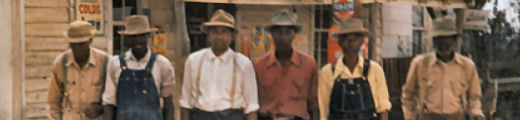
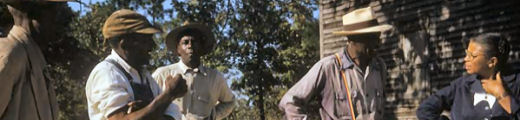
Some years back, I saw a play, Miss Evers’ Boys, about the Tuskegee syphilis study. In 1932. 600 black men were recruited into a Public Healtrh Service study that went on for forty years. In return for participating, they were given free medical care and burial insurance. The back story was that this was a study about the natural course of syphilis and 399 of these men had the disease, but weren’t told. They were only told they had the bad blood [a colloquialism with many meanings]. When penicillin came along in the 1940s, the definitive treatment for the disease, it was neither used nor discussed. The play centered on the study nurse, the Miss Evers of the play, who "saw after" the participants all those years knowing they weren’t being treated. The study was finally leaked in 1972, and the aftermath brought many changes in the safeguards for human experimentation [see Wikipedia’s Tuskegee syphilis experiment].
It’s a story of epidemiology; of racism; and of the origin of Informed Consent and Institutional Review Boards. The entire 1997 HBO Movie of Miss Evers’ Boys is available on-line [1:57:59]…
 |
 Scrapings of the rash revealed those little corkscrew Treponema pallidum organisms bending in the middle that I’d only seen in pictures [the organisms that cause Syphilis]. In spite of our starting him on a very low dose of penicillin, he had a Jarisch–Herxheimer reaction [toxicity from the sudden death of the organisms] requiring high doses of steroids. He had been infected by a dalliance with the wife of a ranking officer at a base in another European country [a delicate and touchy point]. He recovered nicely, but unfortunately we were right the first time. On a subsequent liver biopsy, he also had Chronic Active Hepatitis that had been complicated by the Syphilis infection.
William Osler was "the Father of Modern Medicine" in part because he exemplified the era of the grand clinician – physicians who spent their lives carefully mapping the signs and symptoms, the clinical course, the family and environmental histories of diseases. They collected detailed case histories extracting patterns that became syndromes, many of which still carry their names. Their treatment options were limited, but hard won advances informed by their clinical precision. As monstrous as it was to withhold the diagnosis in the Tuskegee Study early on, and even worse, to withhold treatment when it became available, the idea of gathering precise epidemiological data was consistent with the way medicine operated in the latter nineteenth and early twentieth century.
In our current era, there is a race to treatment based on small differences and speculation, both measured and hypothesized. Each evening, we expect our evening news to be accompanied by an announcement of some medical advance or breakthrough, punctuated by direct to consumer ads with their mumbled warnings. We’ve become used to questionnaires, rating scales, laboratory examinations, and loud whirring machines replacing the classic history and physical examinations of the past. My point here is not simply nostalgia for former days, it’s about the hurried pace with which we race into action, to treatment. The current Tamiflu debacle is an exempler. Billions have been spent on a medication to stave off a hypothesized global epidemic. Now it appears that that medication, while not inert, is hardly suited to the task. We’ve defined Mild Neurocognitive Disorder and the Attenuated Psychosis Syndrome without having a solid anchor that tells us that they are, indeed, the precursors we seek. We are subjected to recurrent studies that try to convince us to use SSRIs in teens with little evidence that they even treat adolescent depression itself, much less prevent anything, and with that come accusations of withholding treatment.
I can think of a couple of doctor bloggers who would agree with this post. Amazing what a little time and a little thought will do in getting to the root of a patients problem, not to mention the cost savings to all involved.
Steve Lucas
Off the cuff, this reminds me of the American conscientious objectors who volunteered for a study of starvation during WW II. They volunteered, and I’m thinking it took all their conviction to bear it.
Tuskegee is inexcusable.
The lack of informed consent with all these “preventive” treatments and the tendency to push for treatment for increasingly small risks is cynical beyond reason.
It’s reassuring to see the risks of statins covered here and in an increasing number of searches. The elderly are currently being used much like blacks in the Tuskegee experiments. I’m guessing the death tolls are much higher, though.
Re “the American conscientious objectors who volunteered for a study of starvation during WW II” – see “The Depths: The Evolutionary Origins of the Depression Epidemic” for fabulous accounts of their experiences – http://psychcentral.com/lib/the-depths-the-evolutionary-origins-of-the-depression-epidemic/00018693 and the author’s blog here http://www.psychologytoday.com/blog/charting-the-depths
We need to be aware of a continuation of this pattern in today’s hospitals and private practices. A 55 year old male goes to the ER with severe lower abdominal pain. First it is gas. Then it is an inflamed bowel. Then they do a complete cardiac workup. Finally on the fourth day they say there may be something on the CT scan taken on admission and take out his appendix.
Four days of pain and expense. My question is; was this done because they did not know or was it an attempt to run up the bill?
This is a hospital that has been sued in some high profile case for unethical business practices. Do the means justify the ends when the end is to maximize revenue and where is the review of this situation to assure patients are diagnosed in a timely manner, not when their insurance is about to run out.
Steve Lucas
The Tuskegee experiment was conducted by the USPHS. Not a corporation. Just thought I’d point that out.
There is zero moral equivalence between Tuskegee and using cognitive enhancers in the elderly with MCI. As much as I question the purpose of the latter.
I think there was a medical committee convened to determine what to do about the Tuskegee syphilis study, and the vote was to continue the study. It was only after a journalist broke the story that the USPHS ended the study, and treated the patients.