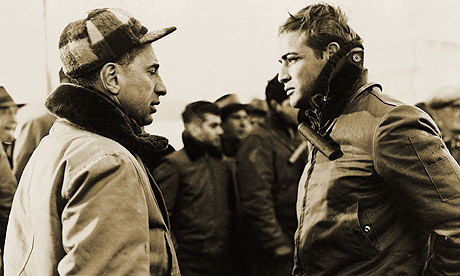
 This evening, I watched the American Masters A Letter to Elia – Martin Scorsese’s tribute to one of my longtime idols, filmmaker Elia Kazan – East of Eden, A Streetcar Named Desire, On the Waterfront, A Face in the Crowd, Wild River, Marlon Brando, James Dean, Rod Steiger, Montgomery Clift ,Tennessee Williams, John Steinbeck. Kazan’s movies, those stories, those authors, the method actors – they were the giants of my youth. Like Scorsese, I read and reread those books, saw and resaw those movies. And like almost every Kazan fan, I’ve always wondered about the blot on Kazan’s record – his testimony in front of the House Unamerican Activities Committee in 1952 when he named eight others from the the Group Theater that had been in the [then legal] American Communist Party with him in 1932 when he first went to Hollywood. He was a forever seen as a "snitch" – vilified in Hollywood for the rest of his life for his testimony on that day.
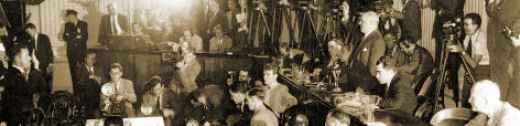
 "blacklist" that ultimately had 300 people on it – people who were thereafter unable to find work in the industry [eg Charlie Chaplin]. The Committee also heard testimony from Hollywood "friendlies" [Hollywood anti-Communists like Ronald Reagan and Ayn Rand]. Kazan was called in later hearings in 1952. At first, he refused to answer, but then did admit to his prior membership in the American Communist Party and named names. Soon thereafter, HUAC fell into disrepute following the antics of "red-baiting" Joseph McCarthy on a similar Committee. Kazan later said:
I was tried by the Party and that was one of the reasons I became so embittered later. The trial was on the issue of my refusal to follow instructions, that we should strike in the Group Theatre, and insist that the membership have control of its organisation. I said it was an artistic organisation, and I backed up Clurman and Strasberg who were not Communists… The trial left an indelible impression on me… Everybody else voted against me and they stigmatised me and condemned my acts and attitude. They were asking for confession and self-humbling. I went home that night and told my wife "I am resigning." But for years after I resigned, I was still faithful to their way of thinking. I still believed in it. But not in the American Communists. I used to make a difference and think: "These people here are damned fools but in Russia they have got the real thing," until I learned about the Hitler-Stalin pact, and gave up on the USSR.
Those Congressional Hearings may have tarnished Kazan’s career, but they launched the political careers of two future Presidents – committee member Richard Nixon and friendly witness Ronald Reagan. And as I’ve been talking about recently, author Ayn Rand, herself a Russian immigrant fleeing Communism, went on to have an effect on our lives even now – reflected in today’s conservative political rhetoric and through the ministrations of her latter day saint, Alan Greenspan.
Sorry, the comment form is closed at this time.